
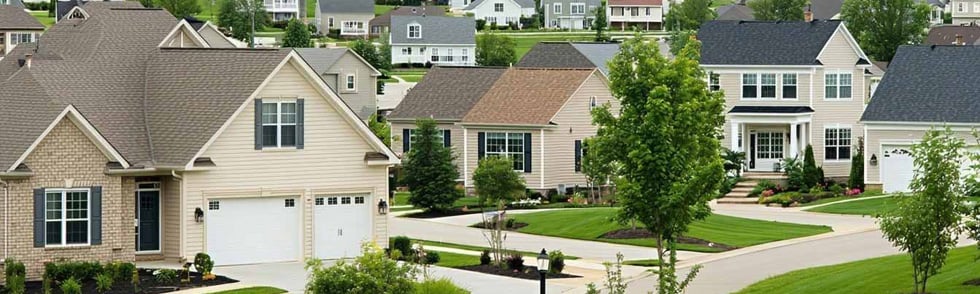
Are you a homeowner in Virginia? Then there’s a good chance you’ve thought about what your property is worth.
But there’s an important distinction homeowners should understand: your home’s market value and its cost to rebuild are not necessarily the same number.
That difference can become especially important after a major loss; a fire, severe storm, fallen tree, or other covered event could leave you facing reconstruction costs that are significantly different from your home’s current real estate value.
For Virginia homeowners, regularly reviewing dwelling coverage limits help make sure a homeowners insurance policy reflects the potential cost of rebuilding, not just what the property might sell for.
| Market Value and Rebuild Cost Are Not the Same Number
It’s common to look at your home’s current market value when thinking about how much insurance you need. However, dwelling coverage is generally based on the cost to rebuild the structure, not its market value.
Market value reflects factors such as:
- The value of the land
- Location and neighborhood
- Local housing demand
- School districts and other community amenities
- Current real estate market conditions
Replacement cost is different. According to the Virginia State Corporation Commission (SCC), replacement cost is the amount it would take to rebuild a home using materials of the same kind and quality at current prices. It does not include the value of the land.
That means a home could sell for one amount while costing substantially more (or potentially less) to reconstruct.
| What It Actually Costs to Rebuild in Virginia
There isn’t one universal per-square-foot price for rebuilding a home in Virginia. Construction costs can vary considerably depending on the home’s size, design, location, materials, labor availability, site conditions, and level of finishes.
A replacement-cost estimate should account for the characteristics that make your particular home more or less expensive to rebuild, rather than relying on a general statewide construction figure.
Construction costs can also change over time. Labor, materials, transportation, permitting, and contractor availability can all affect the price of reconstruction. That’s one reason it’s recommended to review your homeowners insurance limits regularly and take note of external factors, such as inflation and rising construction costs that can increase a home’s replacement cost over time.
For homeowners, this means a dwelling coverage limit that was appropriate several years ago may no longer accurately reflect today’s rebuilding costs.
| What Can Cause Your Rebuild Cost to Increase?
Several factors can make rebuilding your home more expensive than expected.
Rising Material and Labor Costs
Construction materials and skilled labor represent a significant portion of any reconstruction project. Changes in material prices, contractor availability, wages, transportation costs, and demand can all affect the final cost.
These expenses don’t necessarily move in line with Virginia’s housing market. A home doesn’t have to increase significantly in market value for its reconstruction cost to rise.
Older or Custom Construction
Older homes can present unique rebuilding challenges. Features such as custom millwork, plaster walls, masonry, specialty roofing, hardwood flooring, or other architectural details may require specialized materials or skilled trades to reproduce.
A replacement-cost estimate should account for the actual characteristics of the home rather than assuming it can be reconstructed using basic, modern materials.
Building Code Requirements
Another consideration is the potential cost of bringing an older home into compliance with current building requirements.
Virginia insurers are required to offer ordinance or law coverage, which can help cover additional expenses associated with rebuilding or repairing a damaged property to meet applicable building codes and ordinances. The coverage may be available as an endorsement or additional limit, depending on the policy.
For homeowners with older properties, this is an especially important coverage to discuss with an insurance professional.
| The better question isn’t “What is my house worth?” It’s “What would it cost to rebuild my house today?”
A Few Numbers Worth Checking on Your Homeowners Policy
If you haven’t reviewed your homeowners insurance recently, consider discussing these questions with your insurance agent:
1. When was your dwelling coverage limit last reviewed?
Renewing your policy doesn’t necessarily mean the underlying replacement-cost estimate has been independently reconsidered.
It’s recommended to review and potentially increase your policy limits regularly because inflation and changing construction costs can increase the cost to replace a home.
2. Do you have replacement cost coverage?
Replacement cost coverage is designed to pay for the cost of repairing or rebuilding with materials of similar kind and quality, without deducting depreciation, subject to the policy’s terms and limits. Actual cash value coverage, by contrast, accounts for depreciation.
Understanding which type of coverage your policy provides can make a significant difference after a loss.
3. Does your policy provide additional replacement-cost protection?
Some policies offer endorsements that provide additional coverage above the dwelling limit when qualifying reconstruction costs exceed the stated limit.
The availability and amount of this protection vary by insurer and policy, so it’s worth asking your agent whether your policy includes this type of coverage and how it would apply after a major loss.
4. Have you renovated or expanded your home?
A kitchen renovation, finished basement, addition, new bathroom, upgraded flooring, or other major improvement can increase the cost to rebuild your home.
If you’ve made significant improvements since your last insurance review, make sure your insurer has the updated information.
5. Does your home have unique or high-cost features?
Custom construction, specialty materials, historic details, detached structures, upgraded finishes, and other features can affect replacement costs.
The more specific your home is, the more important it becomes to make sure your replacement-cost estimate reflects those characteristics.
| The Bottom Line
Your home’s market value is a snapshot of what the property could potentially sell for. Your dwelling coverage limit should be based on what it could cost to rebuild the home.
Those numbers can change independently.
Regularly reviewing your replacement-cost estimate with your insurance agent can help account for changes in construction costs, renovations, materials, labor, and the unique characteristics of your home. For a more detailed assessment, homeowners may also consider obtaining a professional appraisal or replacement-cost estimate.
Taking a few minutes to review your coverage today could help prevent an expensive coverage gap when you need your homeowners insurance most!
Available Sources
- Virginia State Corporation Commission — Virginia Homeowners Insurance Guide
- Virginia State Corporation Commission — Disaster Strikes: Insured Homeowners Loss
- National Association of Insurance Commissioners — Homeowners Insurance
- National Association of Insurance Commissioners — Replacement Cost vs. Actual Cash Value
Recent Comments